Subscribe For Free Updates!

We'll not spam mate! We promise.

Showing posts with label DEATHS. Show all posts

Undercover soldiers 'killed unarmed civilians in Belfast'

Watch extracts from the BBC's Panorama programme

Related Stories

Soldiers from an undercover unit used by the British army in Northern Ireland killed unarmed civilians, former members have told BBC One's Panorama.
Speaking publicly for the first time, the ex-members of the Military Reaction Force (MRF), which was disbanded in 1973, said they had been tasked with "hunting down" IRA members in Belfast.
The former soldiers said they believed the unit had saved many lives.
The Ministry of Defence said it had referred the disclosures to police.
'Surveillance from gutters'

Analysis

For 15 years, Northern Ireland has been divided about how to deal with the legacy of three decades of conflict.
The compromise has been the establishment of the Historical Enquiries Team, a group of former detectives, who are reviewing all deaths in Northern Ireland during the conflict, primarily to answer questions from their relatives.
But now the Northern Ireland attorney general has reignited the vexed issue of whether truth recovery through a virtual amnesty is preferable to prosecution.
John Larkin has called for an end to all prosecutions and inquiries in relation to Troubles-related killings.
The disclosures by Panorama are bound to add to this debate.
The closest former MRF soldiers have previously come to breaking cover is as the pseudonymous authors of two semi-fictionalised paperbacks, one of whom has referred to the MRF as a "legalised death squad".
The factual account of the MRF may not be quite as colourful. Nonetheless, the evidence gleaned from seven former members, declassified files and witnesses, does point to a central truth - that MRF tactics did sometimes mirror the IRA's.
The details have emerged a day after Northern Ireland's attorney general, John Larkin, suggested ending any prosecutions over Troubles-related killings that took place before the signing of the Good Friday Agreement in 1998.
The proposal has been criticised by groups representing relatives of victims.
Panorama has been told the MRF consisted of about 40 men handpicked from across the British army.
Before it was disbanded 40 years ago, after 18 months, plain-clothes soldiers carried out round-the-clock patrols of west Belfast - the heartland of the IRA - in unmarked cars.
Three former members of the unit, who agreed to be interviewed on condition their identities were disguised, said they had posed as Belfast City Council road sweepers, dustmen and even "meths drinkers", carrying out surveillance from street gutters.
But surveillance was just one part of their work.
One of the soldiers said they had also fired on suspected IRA members.
He described their mission as "to draw out the IRA and to minimise their activities... if they needed shooting, they'd be shot".
'Targets taken down' Another former member of the unit said: "We never wore uniform - very few people knew what rank anyone was anyway.
"We were hunting down hardcore baby-killers, terrorists, people that would kill you without even thinking about it."

“Start Quote

Patricia McVeigh
He was an innocent man, he had every right to be on the street walking home”
Patricia McVeigh Daughter of one victim
A third former MRF soldier said: "If you had a player who was a well-known shooter who carried out quite a lot of assassinations... then he had to be taken out.
"[They were] killers themselves, and they had no mercy for anybody."
In 1972 there were more than 10,600 shootings in Northern Ireland. It is not possible to say how many the unit was involved in.
The MRF's operational records have been destroyed and its former members refused to incriminate themselves or their comrades in specific incidents when interviewed by Panorama.
But they admitted shooting and killing unarmed civilians.
When asked if on occasion the MRF would make an assumption that someone had a weapon, even if they could not see one, one of the former soldiers replied "occasionally".
The aftermath of an IRA bomb in Belfast in 1972 The killings happened over an 18-month period when the IRA's bombing campaign was at its height in Belfast
"We didn't go around town blasting, shooting all over the place like you see on the TV, we were going down there and finding, looking for our targets, finding them and taking them down," he said.
"We may not have seen a weapon, but there more than likely would have been weapons there in a vigilante patrol."
Panorama has identified 10 unarmed civilians shot, according to witnesses, by the MRF:
  • Brothers John and Gerry Conway, on the way to their fruit stall in Belfast city centre on 15 April 1972
  • Aiden McAloon and Eugene Devlin, in a taxi taking them home from a disco on 12 May 1972
  • Joe Smith, Hugh Kenny, Patrick Murray and Tommy Shaw, on Glen Road on 22 June 1972
  • Daniel Rooney and Brendan Brennan, on the Falls Road on 27 September 1972
Patricia McVeigh told the BBC she believed her father, Patrick McVeigh, had been shot in the back and killed by plain clothes soldiers on 12 May 1972 and said she wanted justice for him.

Troubles in Northern Ireland

The conflict in Northern Ireland during the late 20th century is known as the Troubles.
More than 3,600 people were killed and thousands more injured.
During a period of 30 years, many acts of violence were carried out by paramilitaries and the security forces.
"He was an innocent man, he had every right to be on the street walking home. He didn't deserve to die like this," she said.
Her solicitor Padraig O'Muirigh said he was considering civil action against the Ministry of Defence in light of Panorama's revelations.
The MoD refused to say whether soldiers involved in specific shootings had been members of the MRF.
'Pretty gruesome' It said it had referred allegations that MRF soldiers shot unarmed men to police in Northern Ireland.
But the members of the MRF who Panorama interviewed said their actions had ultimately helped bring about the IRA's decision to lay down arms.
Gen Sir Mike Jackson, the former head of the British army, and a young paratrooper captain in 1972, said he had known little of the unit's activities at the time, but admired the bravery of soldiers involved in undercover work.
He said: "That takes a lot of courage and it's a cold courage. It's not the courage of hot blood [used by] soldiers in a firefight.
"You know if you are discovered, a pretty gruesome fate may well await you - torture followed by murder."
Col Richard Kemp, who carried out 10 tours of Northern Ireland between 1979 and 2001, told BBC Radio 4's Today programme charges could be brought if there was new evidence unarmed civilians had been killed.
IRA bomb blast 1972 The IRA planted nearly 1,800 bombs - an average of five a day - in 1972
But he added: "Soldiers often speak with bravado and I wonder how many of those soldiers are saying that they themselves shot and killed unarmed civilians."
Panorama has learnt a Ministry of Defence review concluded the MRF had "no provision for detailed command and control".
Forty years later and families and victims are still looking for answers as to who carried out shootings.
Former detectives are reviewing all of the deaths in Northern Ireland during the conflict as part of the Historical Enquiries Team set up following the peace process.
Around 11% of the 3,260 deaths being reviewed were the responsibility of the state.
Panorama: Britain's Secret Terror Force, BBC One, Thursday 21 November at 21:00 GMT and then available in the UK on the BBC iPlayer.

Aid efforts in Philippines hit high gear

nitial signs visible of communities beginning to shift from survival mode to early stages of recovery.

Last updated: 18 Nov 2013 09:15
Listen to this page using ReadSpeaker
Email Article
Print Article
Share article
Send Feedback
The UN says that more than 13 million have been affected by Super Typhoon Haiyan [Reuters]
Global relief efforts in the Philippines have kicked into high gear, with aid workers, heavy equipment and life-saving supplies flowing into regions devastated by Typhoon Haiyan.
There were initial signs on Monday that communities were beginning to shift from survival mode to the early stages of recovery.
Markets were beginning to reopen, though with very limited wares, some petrol stations were pumping and residents were repairing damaged homes or making temporary shelters out of the remains of their old ones.
"The darkest night is over but it's not yet 100 percent," Lieutenant-General Roy Deveraturda, regional military commander, said.
Nevertheless, residents are desperate to leave the disaster zone amid growing concerns over the lack of food and medicine. And the World Health Organisation (WHO) is warning of sigificant medical concerns.
Chaotic week
The November 8 typhoon killed or left missing more than 5,000 people and left four million displaced, requiring food, shelter and water.
More than 13 million Filipinos are said to have been affected by the storm, and four million have lost their homes.
The first week of the response was chaotic, due to airports in the region being damaged and local governance structures shattered.
At the main airport in Tacloban on Monday, a heavy loader was shifting pallets of water and sacks of rice to lorries. On the main road, teams were shifting debris into lorries.
On Monday, helicopters also flew sorties over remote areas, dropping emergency supplies to villagers.
In many villages, there is no space to land, and the helicopters are forced to hover low and drop the cartons to residents straining to remain standing against the downdraft from the rotor blades.
The International Committee of the Red Cross (ICRC) said on Monday that it had also started distributing aid to residents of Guiuan, Mercedes and Salcedo - shoreline communities in southeastern Samar province that were laid to waste by the super typhoon.
$1bn offered in loans
Military and civilian teams from around the world have arrived to bolster the immediate response by local people and national authorities.
The US government and military have been at the forefront in helping one of its Asian allies. The US government's aid arm announced a further $10m, bringing to $37m the amount it is committed to spending.
That is in addition to around $23 million being provided in grants through the Asian Development Bank, which has also approved a $500 million emergency loan.
On Monday, the World Bank said that it would match that loan offer, bringing to total pledged loan to the Philippines to $1 billion.
President Benigno Aquino toured the disaster area on Sunday and promised to step up aid deliveries.
Aquino, seen as reformist president who had enjoyed considerable public support, has had to deal with a string of crises over the last year.
His administration has been criticised by some over its apparent failure to strictly enforce evacuation orders, and he has increasingly taken a hands-on role in responding to the disaster.
Health challenges
Meanwhile, WHO has given warning that there are monumental health challenges facing those affected by the storm.
Rising temperatures and rain are providing perfect conditions for diseases such as pneumonia and diarrhoea to thrive, the WHO said.
Spotlight
Follow our latest coverage of Typhoon Haiyan
Survivors are also being exposed to massive amounts of rubbish and debris, and there are still a large number of decaying dead bodies that have yet to be buried.
Security forces are also trying to impose order in Tacloban, the area worst hit by Haiyan, which remains largely without electricity.
With a shortage of food and only 10 percent of the police force working in the days after the storm, the city quickly fell into chaos.
A night-time curfew has now been enforced to help restore calm.
Many people are also still trying to escape Tacloban, as there remain severe food and water shortages.

George Zimmerman charged with felony after allegedly pointing gun at girlfriend

Watch this video

Zimmerman accused of domestic violence

STORY HIGHLIGHTS
  • NEW: Women tells 911 that man is breaking things with gun because she asked him to leave
  • NEW: On another call, man says woman broke things, his gun was locked up
  • George Zimmerman was charged with one felony, two misdemeanors
  • He will appear before a judge on Tuesday afternoon
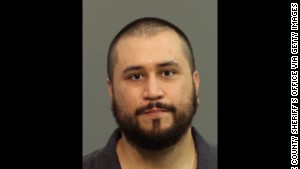
(CNN) -- George Zimmerman was charged Monday with felony aggravated assault after allegedly pointing a shotgun at his girlfriend, according to Dennis Lemma, chief deputy with the Seminole County, Florida, Sheriff's Office.
Zimmerman, who was acquitted earlier this year of murdering teenager Trayvon Martin, was arrested after the incident at the home of Samantha Scheibe, Lemma said. He also was charged with two misdemeanors -- domestic violence battery and criminal mischief -- in connection with the same incident, Lemma said.
Zimmerman is being held in jail without bail and will make his first appearance in front of a judge Tuesday at 1:30 p.m. ET.
Differing 911 calls
Deputy: Zimmerman barricaded door
According to a police report on the incident, Scheibe said that after an argument Zimmerman broke a table with a shotgun then pointed it at her "for a minute."
Scheibe called 911 at 12:30 E.T., Lemma said.
On a 911 call recording released by police, a woman can be heard telling authorities: "He's inside my house breaking all my (things) because I asked him to leave."
The woman then says to someone at the house, "I'm doing this again? You just broke my glass table. You just broke my sunglasses and you put your gun in my freaking face and told me to get the (expletive) out."
A man is heard telling her to calm down, but then she tells the dispatcher that the man just pushed her out of the house and locked the door.
On a separate 911 call, a man calls to report that his girlfriend was "for lack of a better term, going crazy on me" and throwing his things out. The caller says the woman is outside with police.
When asked why he is calling, the man says, "I just want everyone to know the truth."
He says he never pulled a firearm and that it is in a bag, locked. He claims she was the one who broke the table.
When deputies arrived at the house, Scheibe gave them a key. When they pushed open the door -- which was blocked by several small pieces of furniture -- they found Zimmerman, who was sitting and unarmed, Lemma said. He was passive and cooperative, Lemma said.
The sheriff's office was seeking a search warrant to look for two guns deputies believed were inside the home, he said. According to the police report, Zimmerman had locked up the guns before police arrived.
Recent contact with authorities
This is one of several brushes that Zimmerman has had with law enforcement since he was acquitted this year of murder and manslaughter in the 2012 shooting death of teenager Trayvon Martin.
Earlier this month, police in Lake Mary, Florida, said no charges would result from an alleged domestic dispute in September between George Zimmerman and his estranged wife, Shellie Zimmerman.
Shellie Zimmerman said in September that she has doubts about his innocence in the Trayvon Martin case.
Since his acquittal in the Martin case, Zimmerman also has been stopped for speeding twice. He was pulled over the first time in Forney, Texas, in July and told the police officer he had a concealed weapon permit and a gun in his glove compartment. The officer wrote on his incident report that he gave Zimmerman a verbal warning.
Zimmerman was pulled over in early September going 60 mph in a 45-mph zone in Lake Mary and received a $256 ticket. He was not carrying a weapon at the time.
National headlines
Zimmerman fatally shot Martin in the Sanford neighborhood where Zimmerman and Martin's father lived in February 2012. Zimmerman, who is Hispanic, had a confrontation with the unarmed African-American teen after calling police to report a suspicious person, and he said he shot Martin, 17, in self-defense.
Zimmerman was acquitted by a six-person jury in July on second-degree murder and manslaughter charges.
The high-profile case sparked a heated nationwide discussion of race as well as debate o